The problem
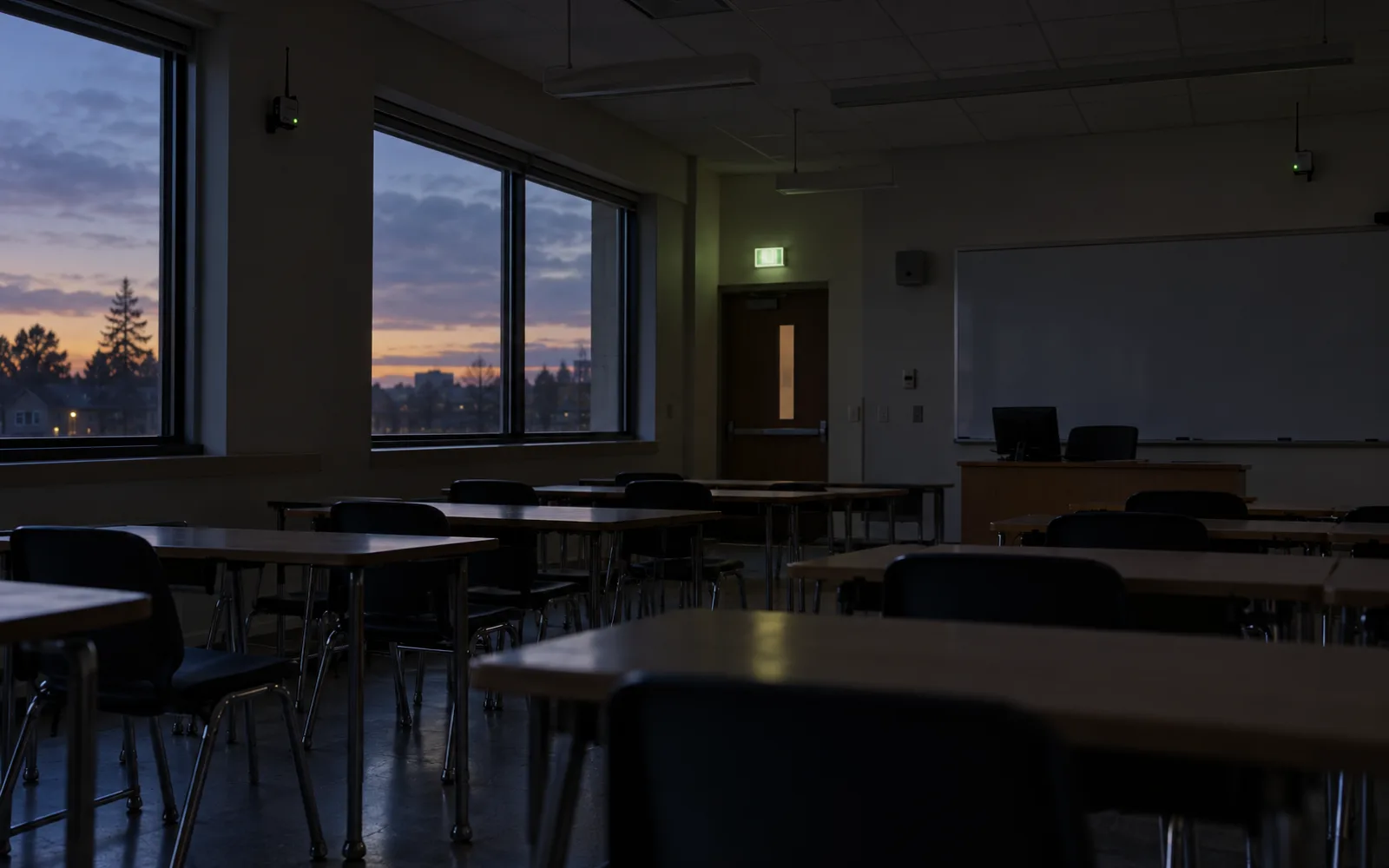
In a fire, an earthquake or a long blackout, responders need to know which rooms have people in them and which have hazards. That is exactly when a building's network and the Internet are most likely to be gone.
The design
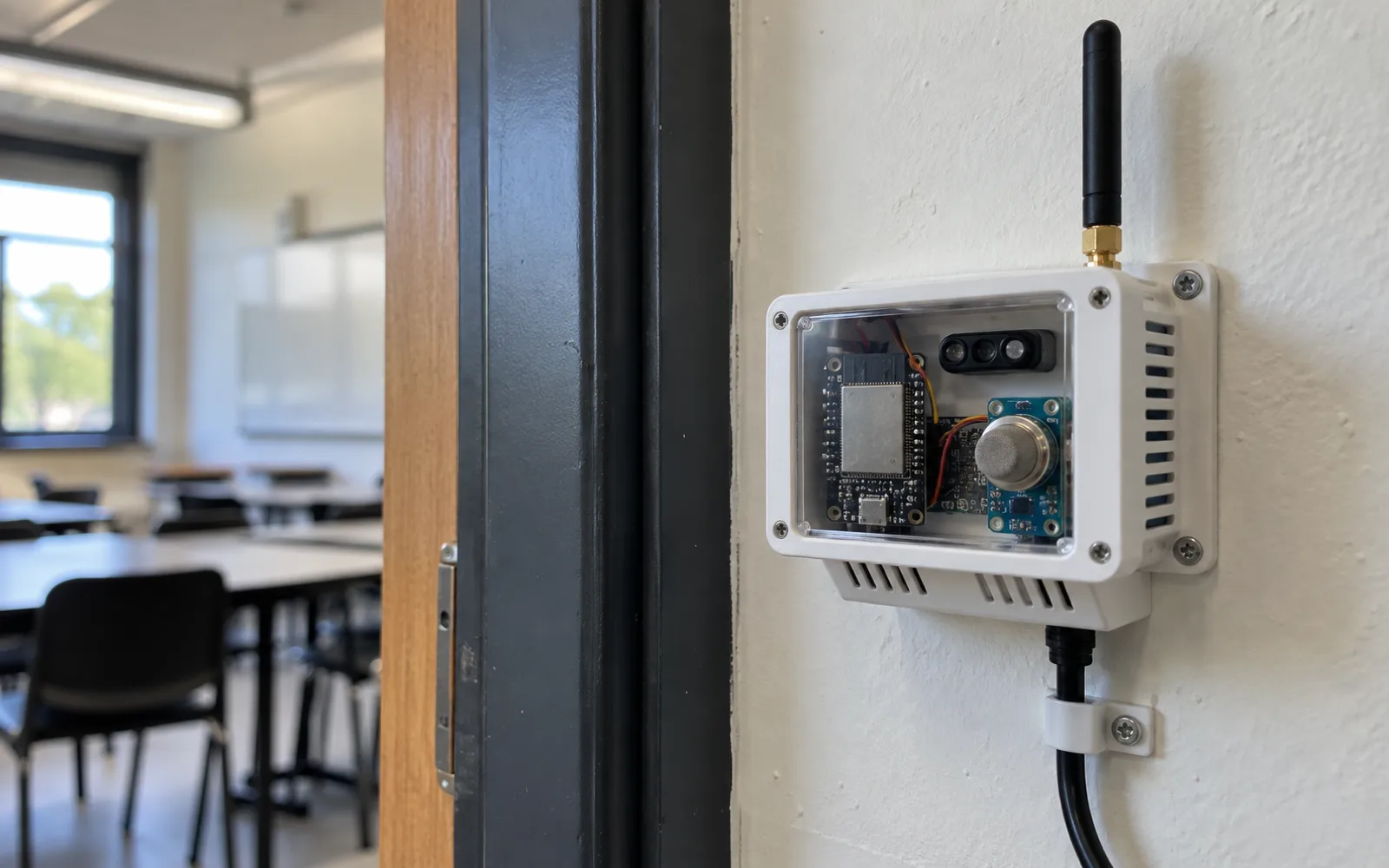
- Sensing. ESP32 sensor nodes and Wi-Fi motion sensing build room-level evidence of presence and hazards.
- A link that survives. When Wi-Fi and the Internet fail, a LoRa radio link carries the evidence. Every frame is encrypted and authenticated with Ascon-AEAD128, the NIST lightweight-cryptography standard, with replay protection.
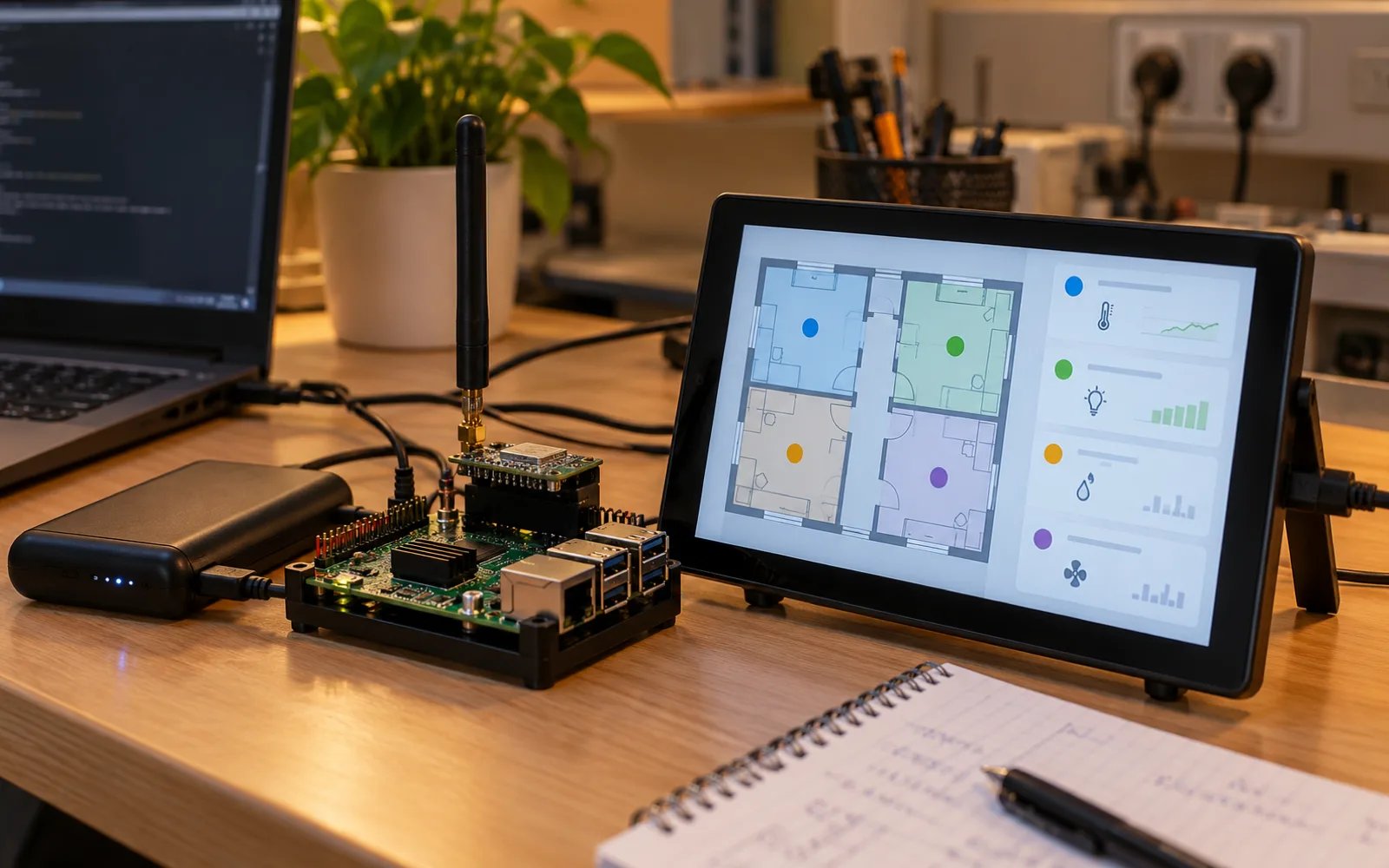
- A command station on battery. A Raspberry Pi 5 runs the operator dashboard and an assistant with no cloud at all.
- An offline assistant. It answers in Arabic or English from local documents, using hybrid retrieval (keywords plus embeddings) and a small language model running on the Pi through llama.cpp.
Built and tested so far
- The radio wire format, the rule engine and the Ascon-AEAD128 implementation, verified against all 1,089 official test vectors.
- 165 automated tests passing on both a Mac and the Raspberry Pi.
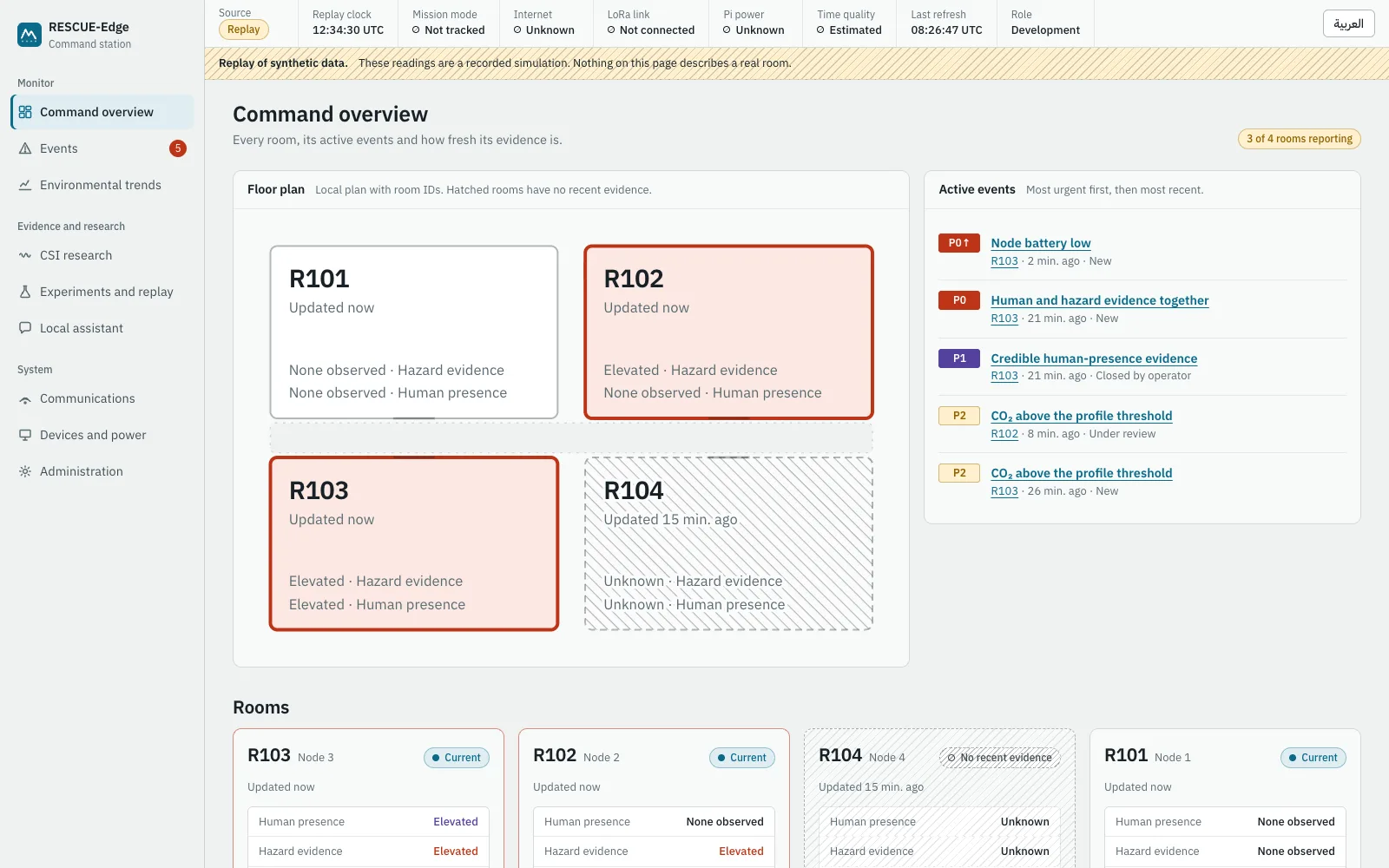
- The operator dashboard: ten screens in Arabic and English, running on replay data. Unknown or stale readings are drawn hatched, never green, so missing data can't look safe.
Honest limits
The hardware build is in progress. Images marked "concept render" are illustrations, not photos. Detection thresholds in the prototype are development values, not approved safety limits.